Personal routines happen around the realities of the route. Illustrative scene.
The delivery window moves. The familiar stop is full. Dinner depends on what is open, where the truck can park, and how the rest of the route unfolds.
From a distance, a meal looks like a simple decision. On the road, it can be a chain of practical questions: access, space, timing, refrigeration, and the next opportunity to restock. Wanting a predictable routine does not make those pieces predictable.
That is why advice built around a perfectly stocked home kitchen can miss the point. A useful plan starts with the equipment, stops, and choices a driver can actually use.
The same standard applies to optional supplements. Read the formula, understand the serving, and consider storage before deciding what deserves a place in the travel routine.
THE IDEA IN ONE SENTENCE
Build around the stops and facilities the route actually provides.
01 ACCESS COMES BEFORE GOOD INTENTIONS
The best option has to be reachable.
A restaurant can be nearby and still be impractical for a large vehicle. A plan to buy groceries can fall apart when a stop takes longer than expected. A packed meal depends on having suitable storage.
NIOSH identifies irregular schedules, long hours, and limited access to healthy foods as challenges in long-haul work.1 The useful response begins with those conditions.
Keep a short list of stops that have worked on familiar routes. Consider one realistic backup meal option. Work within the safe storage available. These are ways to make the next decision more concrete, even when a day does not follow the original plan.
02 RESEARCH SPOTLIGHT · LIFE ON THE ROAD
THE RESEARCH, IN CONTEXT
Drivers described barriers a shopping list cannot solve alone.
30drivers in the sample
4focus groups
A qualitative study used four focus groups with a convenience sample of 30 long-haul truck drivers. Participants described obstacles to eating well and being physically active. The researchers highlighted access, limited time, and cost as issues that interventions needed to address.2
The study captures these drivers' experiences. It does not measure how common each barrier is among all drivers or establish the effect of a particular routine.
See current pricing, offers, and full product details.
03 LESS PREPARATION TO ORGANIZE
An optional serving without a mixing step.
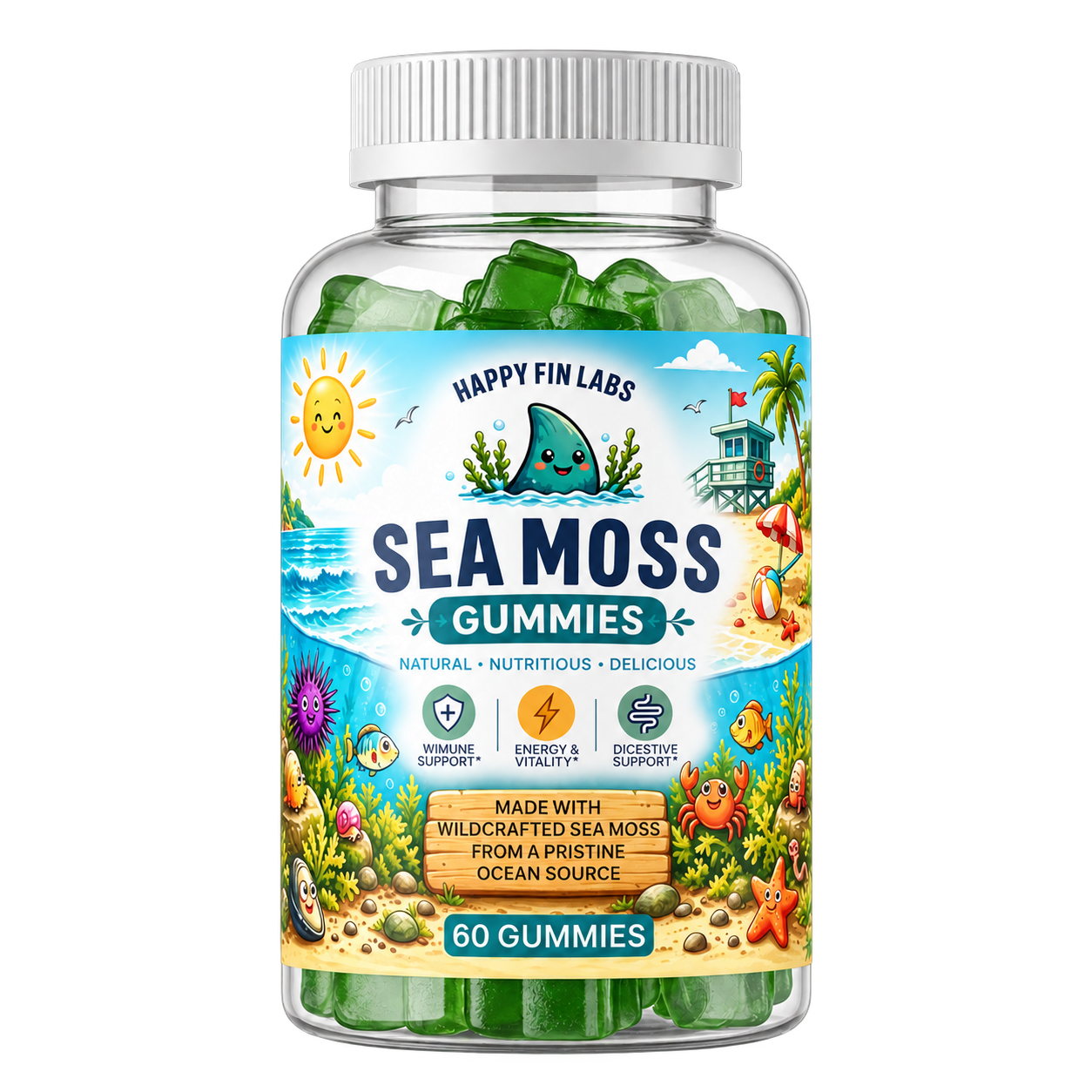
HappyFin offers a gummy format for adults considering sea moss. Its labeled two-gummy serving combines sea moss blend, bladderwrack extract, and burdock root extract, in tropical citrus flavor. The gummies use vegan pectin.P
There is no powder to measure and no shaker to clean. That may suit a personal routine when facilities are limited, provided the bottle can be stored according to its directions. Convenience still includes looking after what is carried.
The supplement is an optional item beside the meal plan. It does not fill the role of food, rest, or safe driving arrangements. We have no finished-formula evidence that it improves alertness, and the length of a route is not a reason to change the labeled serving.
04 THE LABEL, UP CLOSE
Three featured botanicals. Clearly listed amounts.
The brand’s product page lists the following per two-gummy serving.*
01
Sea moss blend
1,000 mg
The featured seaweed ingredient. The page does not specify the blend’s species or a measured mineral profile.
02
Bladderwrack extract
250 mg
A brown seaweed ingredient. The page does not state extract standardization or iodine content.
03
Burdock root extract
250 mg
A botanical root extract. Its extraction ratio is not specified on the product page.
20 calories5 g carbohydrate3 g total sugars
Other listed ingredients: organic cane sugar, tapioca syrup, pectin, citric acid, and natural flavor. Follow the label on the bottle you receive.
Where the evidence stops
The research discussed here does not test HappyFin’s finished formula. We have not identified a clinical trial establishing its benefits. The reason to consider this bottle is its listed ingredients and convenient gummy format.
Sea moss is the starting point. The finished formula and serving details matter, too. Brand-supplied imagery.
05 MAKE IT PRACTICAL
A small plan for the next stretch.
Make the decisions that can be made while parked, with the actual route in view.
1
Choose a workable stop and a backup.
Consider parking access, opening hours, and the next realistic meal opportunity. Keep the plan flexible enough for a delay without relying on a single location.
2
Match supplies to storage.
Bring food only with suitable storage arrangements. If HappyFin is part of the plan, check that its cool, dry storage requirements can be maintained; a hot dashboard is not a storage solution.
3
Keep the serving separate from the drive.
Use a familiar daily moment while safely parked, and follow the current bottle directions. Keep meals, rest, and any prescribed care on their own schedule.
No supplement should be used as a reason to drive while sleepy or to extend time behind the wheel.
“
A realistic routine starts with respect for the road.
THE HAPPY FIN PERSPECTIVE
06 BEFORE YOU CHOOSE
A few worthwhile questions.
Can the gummies help a driver stay alert longer?
This article establishes no alertness benefit. HappyFin is not presented as a way to manage sleepiness or extend driving time. Rest and safe driving arrangements remain essential.
Do the same directions apply on a long route?
Follow the current product label regardless of distance. The supplied 60-gummy bottle contains 30 two-gummy servings. Route length does not justify taking additional servings.
What is in a serving, and is it vegan?
The brand lists sea moss blend, bladderwrack extract, and burdock root extract in a vegan, pectin-based gummy. A two-gummy serving lists 20 calories and 3 g total sugars. Organic cane sugar and tapioca syrup appear in the ingredients.
What does one bottle provide?
The supplied bottle contains 60 gummies, or 30 servings at two gummies per day. The flavor is tropical citrus. Follow the current label and visit the product page for pricing and purchase terms.
What should I check before taking it?
Consult a qualified healthcare professional before use if pregnant or nursing, taking medication, or managing a thyroid condition. Seaweed can contribute iodine; excess iodine can affect thyroid function. The supplied product page does not quantify iodine per serving.* Follow the bottle’s directions and keep it out of reach of children.
A SMALL PLACE TO START
Choose what fits the real route.
Bring a simpler sea moss format to the routine. Check HappyFin’s formula and storage details, then choose the two-gummy serving that fits your next trip.
Product facts were read from the brand’s page on October 2, 2026. Bottle count follows the supplied 60-gummy packaging. Sources support the specific discussion beside each citation; they do not establish efficacy of this finished formula.
NIOSH. Long-haul Truck Drivers. Occupational context for irregular schedules, long hours, and food access. No supplement efficacy or endorsement.