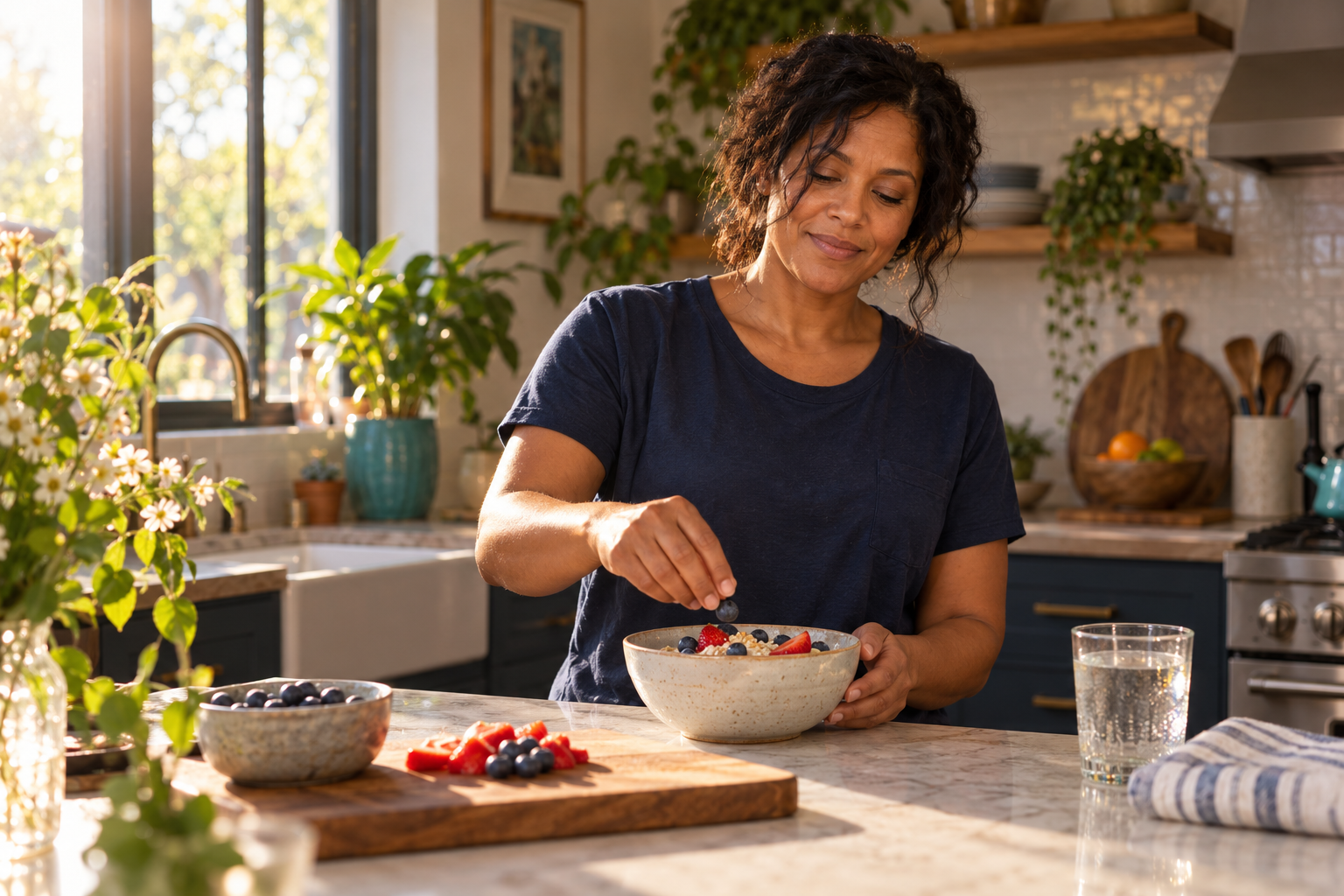
There is a person behind the scrubs, with a whole life beyond the shift. Illustrative scene.
The last handover is done. The badge comes off. But the rest of the day is already waiting.
There is something to pick up, someone to call, a meal to figure out. The lunch that sounded good at the start of the shift may still be sitting in a bag. Somewhere between looking after other people and getting home, personal plans become tomorrow’s plans.
That is the tension behind so many elaborate wellness routines: they assume a predictable morning, an uninterrupted break, and enough attention left over to follow every step.
A full life needs a routine with fewer demands. If sea moss is already on the list of supplements you are considering, the format deserves a closer look.
THE IDEA IN ONE SENTENCE
Give a small habit a place in the day you actually have.
01 THE EVERYDAY PROBLEM
A changing schedule makes ordinary things less ordinary.
Breakfast might happen when everyone else is thinking about dinner. A day off can involve shifting back to the rest of the household’s schedule. Even a familiar routine can lose its usual place.
NIOSH’s guidance for nurses recognizes the sleep and fatigue challenges associated with shift work and long hours. Its recommendations address sleep, schedules, and working conditions—not a supplement shortcut.1
Those foundations matter. So does leaving room for a meal, a conversation, or a quiet moment that belongs to the person doing all the caring.
For optional habits, the useful question is practical: how many steps does this add?
A familiar daily moment can give a new habit somewhere to belong.
02 THE HUMAN RESEARCH
A routine becomes familiar by being repeated.
In a randomized study published in the British Journal of Health Psychology, 192 adults chose an everyday nutrition behavior and linked it to either a daily routine or a specific time. They were asked to report on that behavior daily over an 84-day study period.2
RESEARCH SPOTLIGHT · HABIT FORMATION
A cue. A behavior. A chance to repeat.
192adults randomized
84day study period
Both groups reported increasing automaticity. The study found no significant difference between cue types. Repeatedly carrying out the behavior helped predict how automatic it became.
This study examined everyday nutrition habits. It did not test HappyFin, sea moss, nurses specifically, or any health benefit from gummies.
For a schedule that moves around, a familiar event—such as a regular meal—may be easier to remember than an idealized morning routine. That is a practical option to try, not a promise that one approach works best for everyone.
The aim is modest: choose something manageable, give it a consistent cue, and leave perfection out of the job description.
TROPICAL CITRUS
MEET HAPPY FIN LABS
Sea moss. A simpler way to take it.
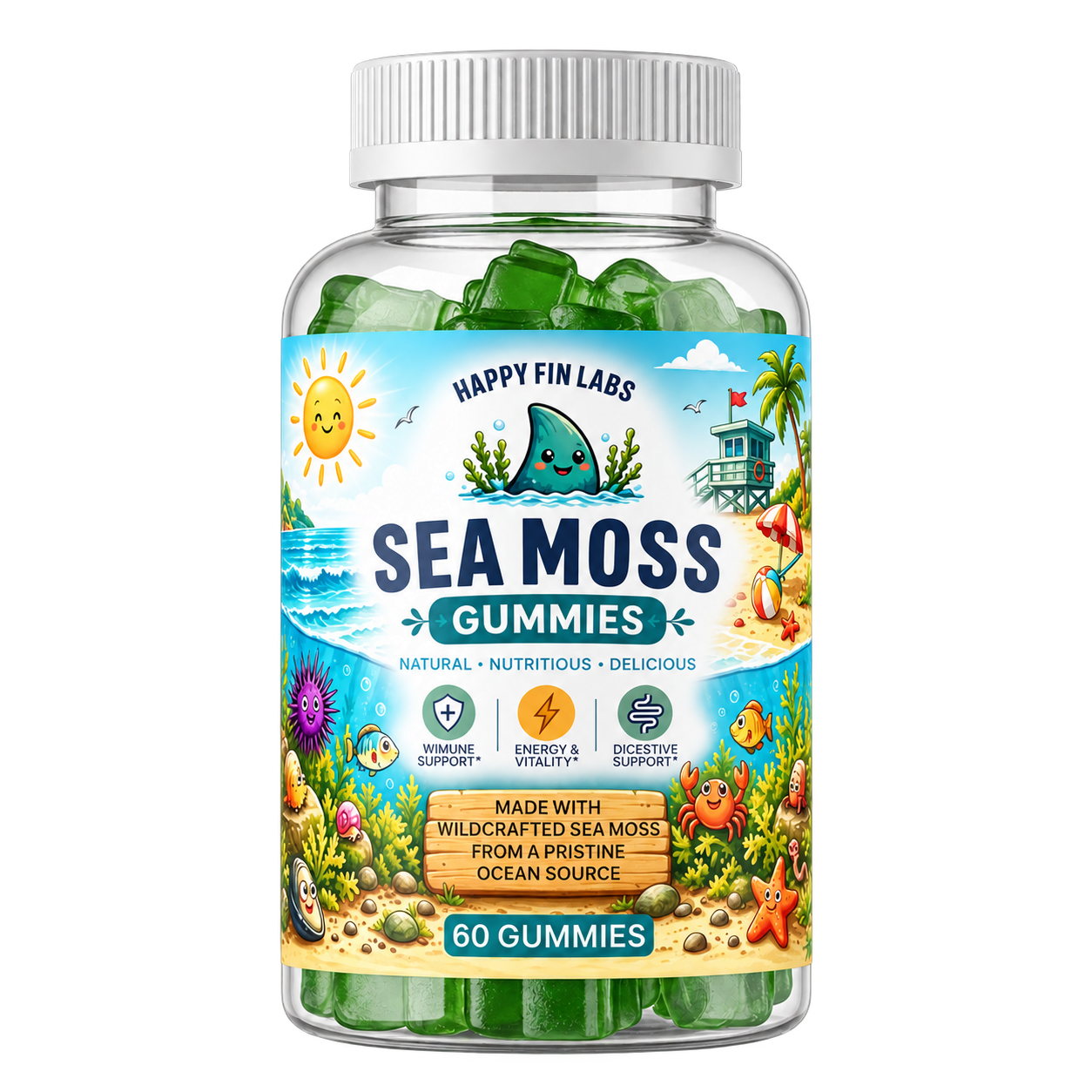
Sea moss blend, bladderwrack extract, and burdock root extract in a tropical citrus gummy.
No mixing. No spoonful to measure. Two gummies make one labeled daily serving.
See current pricing, offers, and full product details.
03 WHAT IS ACTUALLY INSIDE
Three featured botanicals. Clearly listed amounts.
A supplement decision starts with the formula. Here are the amounts listed on HappyFin’s product page per two-gummy serving.3
01
Sea moss blend
1,000 mg
The featured seaweed ingredient. The product page does not specify the blend’s species or a measured mineral profile.
02
Bladderwrack extract
250 mg
A brown seaweed ingredient. The page lists its amount, but does not state extract standardization or iodine content.
03
Burdock root extract
250 mg
A botanical root extract. Its extraction ratio is not specified on the product page.
20 calories5 g carbohydrate3 g total sugars
Per two-gummy serving. Other listed ingredients: organic cane sugar, tapioca syrup, pectin, citric acid, and natural flavor. Follow the label on the bottle you receive.
Sea moss is the starting point. The finished formula and serving details matter, too. Brand-supplied imagery.
04 INGREDIENTS, IN CONTEXT
Good research asks “which form, how much?”
A botanical’s name alone does not tell the whole research story. A tea, a standardized extract, and a gummy blend can differ in meaningful ways.
For example, a small human burdock study used three cups of root tea daily for six weeks in people with knee osteoarthritis. It assessed inflammatory and oxidative-stress markers. That preparation is different from the 250 mg extract listed here.4
A placebo-controlled trial of a specific bladderwrack-derived extract found no significant advantage for osteoarthritis symptoms. It tested a standardized preparation, not HappyFin’s formula.5
What that means for this bottle
These studies do not establish that HappyFin improves energy, digestion, skin, or recovery. We have not identified a clinical trial of this finished formula. Its clear, practical appeal is the gummy format and the listed ingredients—not a guaranteed health result.
For someone already interested in sea moss, that leaves a straightforward buying decision: consider the ingredients, the serving, the taste preference, and whether this format fits.
05 MAKE IT PART OF REAL LIFE
One familiar moment. One simple serving.
If HappyFin is a suitable choice for you, start with a moment that already happens. A regular meal. The point when the bag gets packed. A place in the day that does not need a new alarm.
1
Choose the cue.
Pick a daily event that makes sense for your schedule.
2
Follow the serving.
The product page directs adults to chew two gummies daily. Follow the bottle’s current instructions.
3
Keep the basics.
Keep meals, sleep, movement, and appropriate care in the picture. A supplement does not replace them.
Store in a cool, dry place, out of reach of children. A hot car or a humid bathroom is not a good storage spot.
A life beyond the shift. Illustrative imagery, not a customer testimonial or product result.
“
The person behind the scrubs belongs on the list, too.
THE HAPPY FIN PERSPECTIVE
06 BEFORE YOU CHOOSE
A few worthwhile questions.
Is this a treatment for fatigue or shift-work sleep problems?
No. HappyFin is a dietary supplement. This article does not establish it as a treatment for fatigue, burnout, or sleep disorders. Persistent or unexplained symptoms deserve an appropriate clinical assessment.
Does it contain “92 minerals”?
The product page uses that phrase, but the displayed Supplement Facts do not quantify 92 minerals or their amounts. This article makes no 92-mineral or deficiency-correction claim. Ask the brand for finished-product nutrient testing if that information matters to your decision.
What if I have a thyroid condition or take medication?
Speak with a qualified healthcare professional before use. Seaweed can contribute iodine, and too much iodine can cause thyroid problems. The page does not state the iodine amount per serving. The brand also advises consultation during pregnancy or nursing, when taking medication, or when managing a thyroid condition.6
Are the gummies vegan? Is there added sugar?
The brand describes a vegan, pectin-based gummy without gelatin. The listed ingredients include organic cane sugar and tapioca syrup; the displayed panel lists 3 g total sugars per serving.
What does a bottle provide?
The bottle shown contains 60 gummies: 30 servings at the two-gummy daily serving listed on the product page. It describes the flavor as tropical citrus. Visit the product page for current pricing, availability, and purchase terms.
A SMALL PLACE TO START
Make room for a routine that fits.
Take a closer look at HappyFin’s Sea Moss Gummies. Read the formula. Consider the format. Choose what makes sense for your day.
Formula and serving directions were read from the brand’s page on October 2, 2026; the bottle count follows the supplied 60-gummy packaging. Research below supports the specific discussion beside each citation; it does not establish efficacy of HappyFin’s finished formula.
Happy Fin Labs. Sea Moss Gummies product page. Source for the displayed formula, other ingredients, serving directions, and format. The displayed bottle count follows the brand-supplied 60-gummy image. Product facts are brand-reported.